

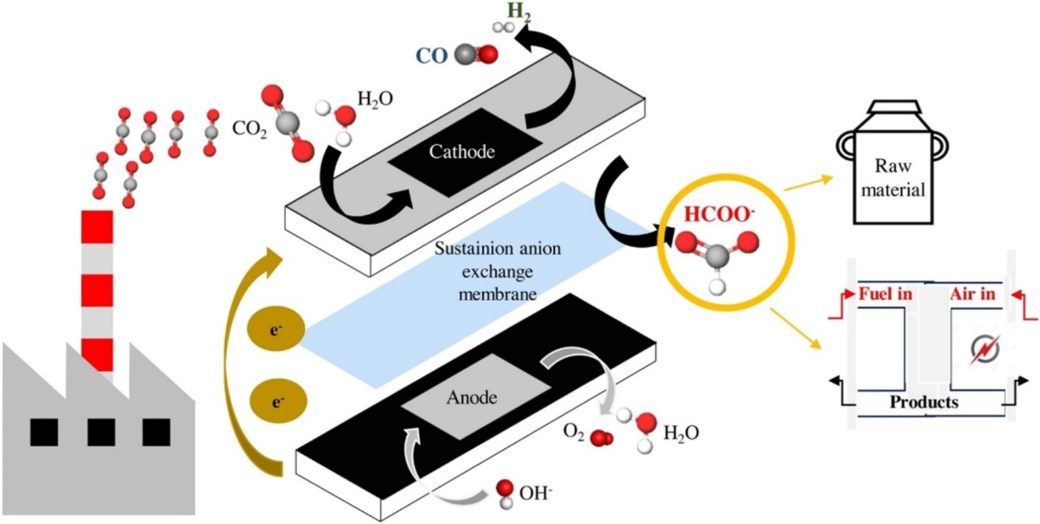
The electrochemical conversion of CO2 to formic acid or formate has attracted great interests recently. There is a large number of studies published in this field. However, most of the studies operated in a discontinuous mode in different electrochemical reactor configurations which is not feasible for industrial applications. Further, many studies were conducted with a current density lower than 100 … Read More
Hydrogen Production: Photocatalytic Water Splitting or Solar-Electrolysis?
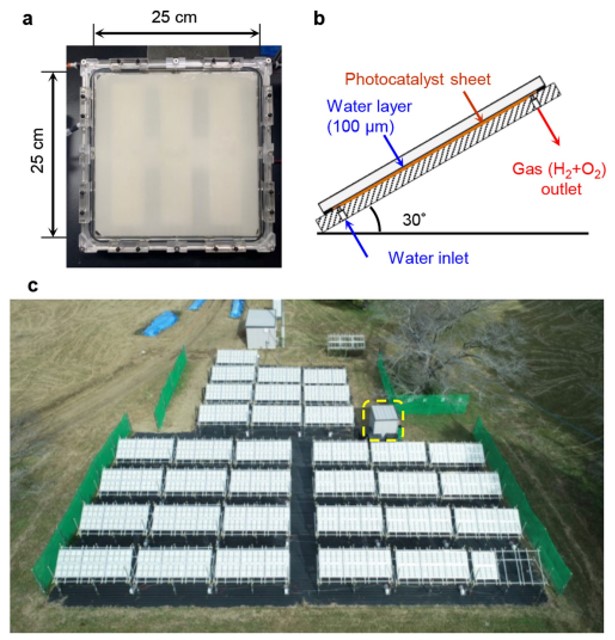
Recently, a paper was published in Nature (doi.org/10.1038/s41586-021-03907-3), demonstrating a 100 m2 array of panel reactors to produce hydrogen from water under the sun. Hydrogen is an attractive and versatile energy carrier, which can be produced from water through photocatalysis using sunlight, and through electrolysis driven by solar or wind energy. Photocatalytic water splitting reaches notably lower conversion efficiencies of … Read More
Electroosmotic flow steers neutral products and enables concentrated ethanol electroproduction from CO2
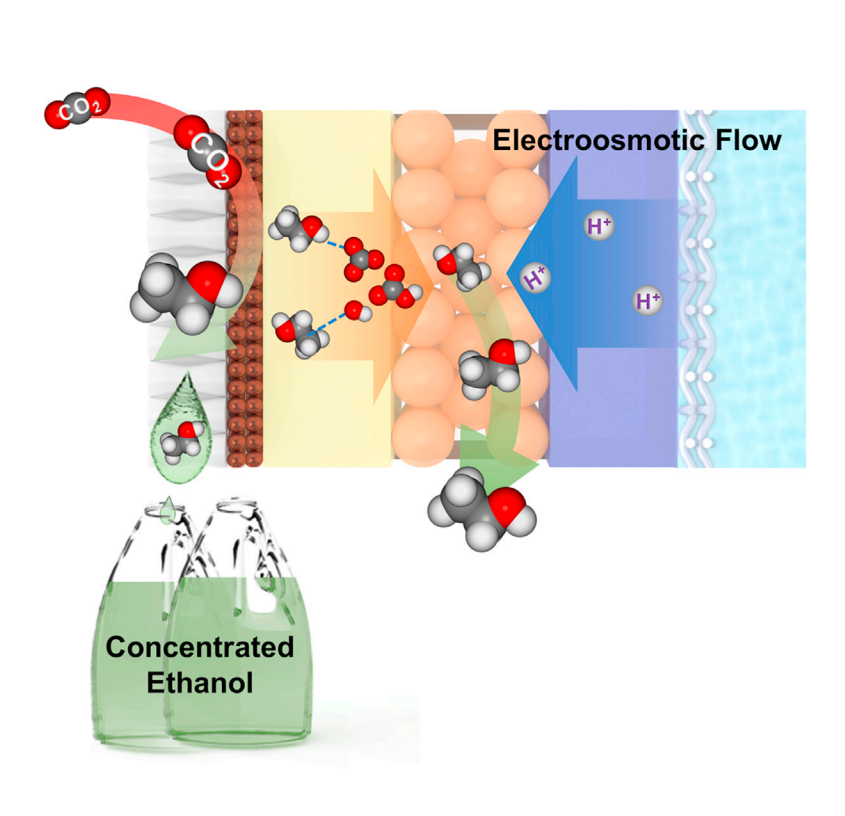
Electrochemical CO2 reduction reaction (CO2RR) provides a promising route to convert renewable electricity into valuable and storable multi-carbon products such as ethanol. With recent advances in CO2RR catalysts, the electroproduction of ethanol approaches industrially relevant production rates and selectivities. Membrane electrode assembly (MEA) electrolyzers are reaction platforms that, when equipped with highly active and selective catalysts, enable CO2-to-ethanol conversion at … Read More
New technique improves conversion of carbon dioxide into liquid fuels
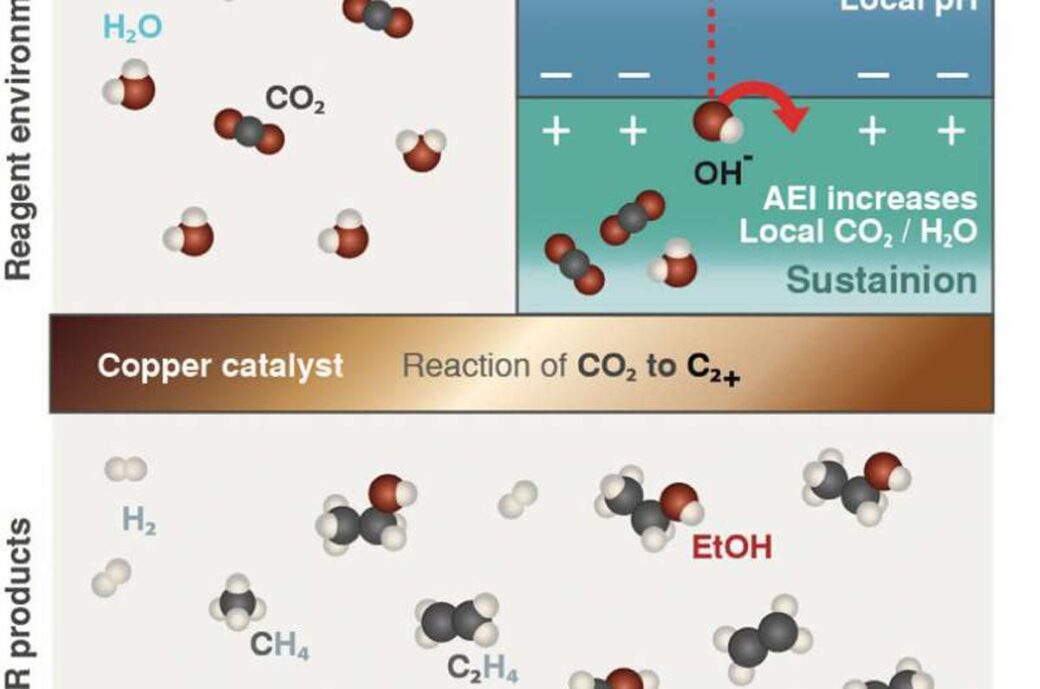
A new approach to improve conversion of CO2 into liquid fuels has been recently highlighted by PHYS.ORG. The technique is developed by Alexis Bell’s group from Lawrence Berkeley National Laboratory (LBNL) by coating the surface of the copper catalysts with Nafion™ and Sustainion® ionomers, leading to a 250% increase in C2+ production compared to static electrolysis over uncoated copper. (https://www.nature.com/articles/s41560-021-00920-8) . Read More at https://phys.org/
Starch from CO2 – a disruptive revolution
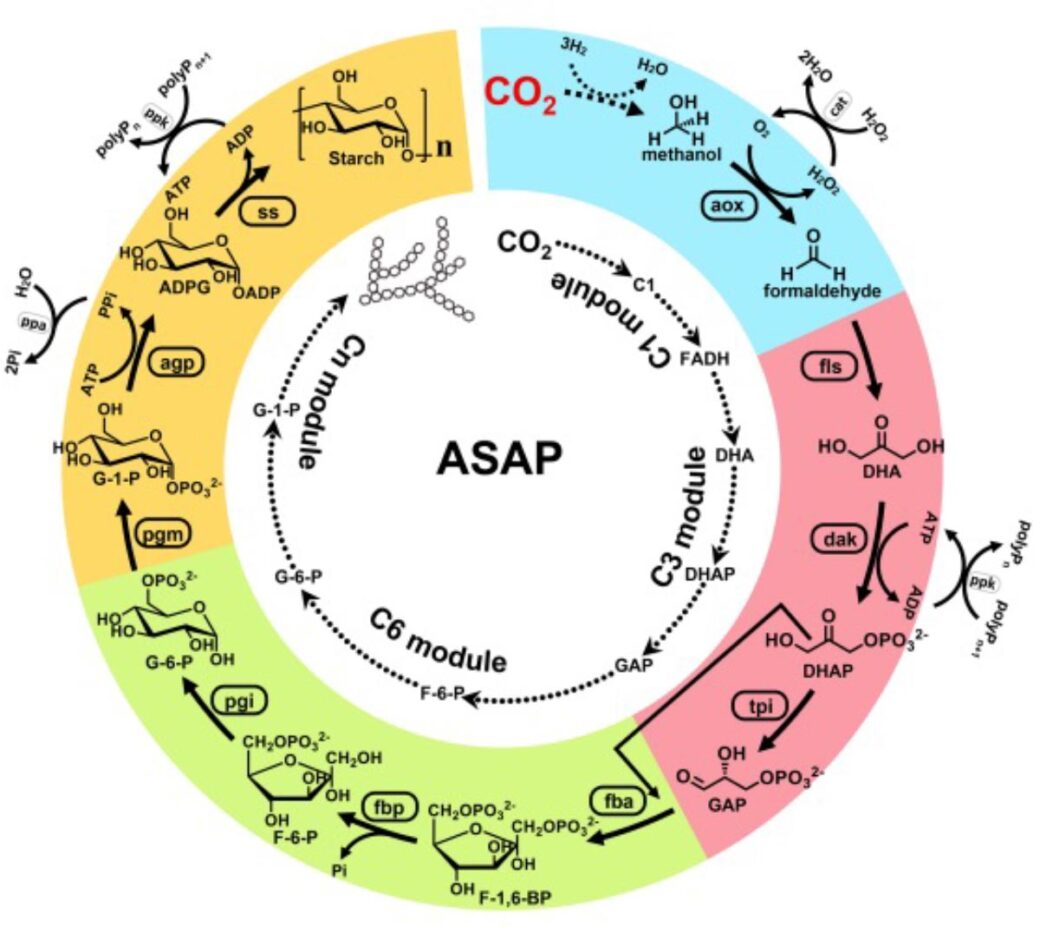
Fig. 1. Design and modular assembly of an artificial starch anabolic pathway. Inner circle: schematic of the artificial starch pathway drafted by computational pathway design with divided modules. C1 here indicates formic acid and methanol. Outer circle: schematic of artificial starch anabolic pathway (ASAP) 1.0, with individual modules colored. Auxiliary enzymes and chemicals are indicated. ADPG, ADP glucose; aox, alcohol … Read More
pH Dependence of CO2 Reduction to CO
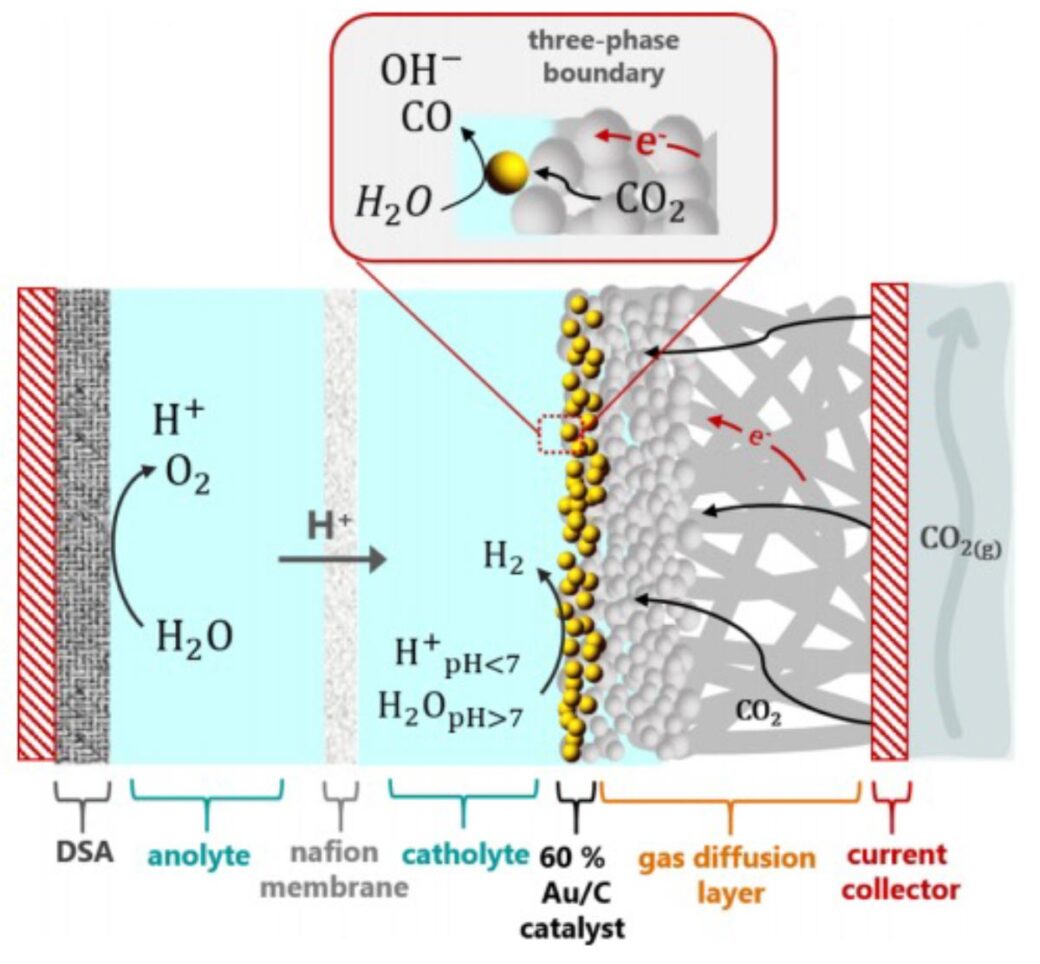
Fig. 1 CO2 electrolysis. Schematic representation of the gold gas diffusion electrode system CO2 electrolysis has mainly been performed in neutral or alkaline media, but some fundamental work shows that high selectivities for CO can also be achieved in acidic media. A recent paper, published in nature communications (doi.org/10.1038/s41467-021-24936-6), reported that CO2 electrolysis can operate at pH 2-4 in sulfate … Read More
Low-Valence Znδ+(0<δ<2) Single-Atom Material as Highly Efficient Electrocatalyst for CO2 Reduction
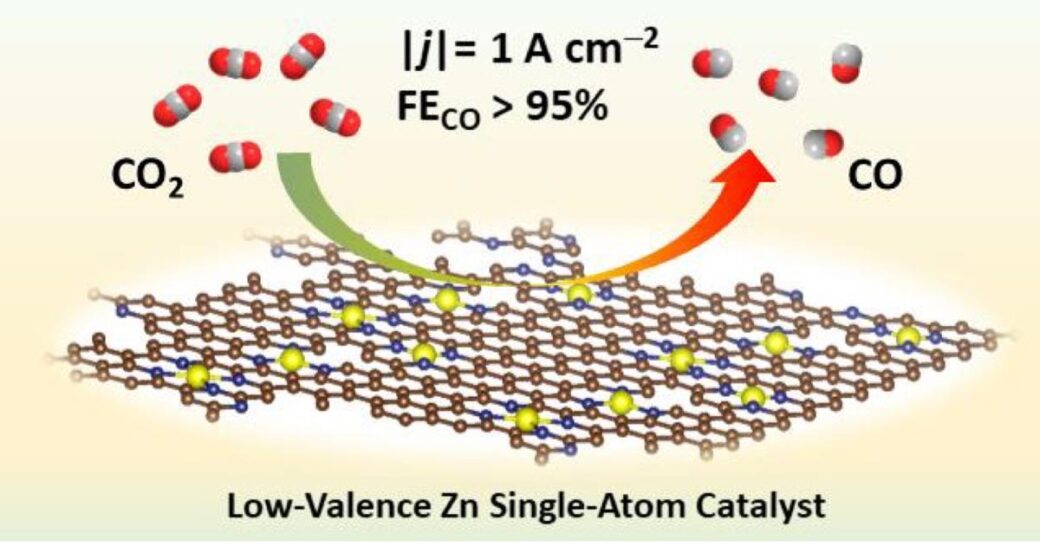
The electrochemical CO2 reduction reaction (eCO2RR) represents a promising solution for mitigation of excessive CO2 concentration in the atmosphere as well as for utilization and transformation of CO2 into value-added chemicals and commodities. This technology, if powered by renewable energy such as solar and wind power, has great potential to reach industrial level and achieve long-term energy storage. However, the … Read More
Record Water Electrolysis Efficiencies
Panasonic Researchers Reach Record Efficiencies With Sustainion® A group of researchers at Panasonic Corporation, Japan recorded an energy conversion efficiency of 74.7% for an alkaline water electrolysis cell flowing 1.0 A cm-2 in 1 M KOH at 80 °C. The use of NiFe based cathodes was enabled by using our base stable anion conducting Sustainion® membrane and the corresponding results … Read More
Dioxide Materials work was highlighted in the Sept 1, 2017 issue of Science Magazine
Dioxide Materials work was highlighted in the Sept 1, 2017 issue of Science Magazine. Click Here to see the article