
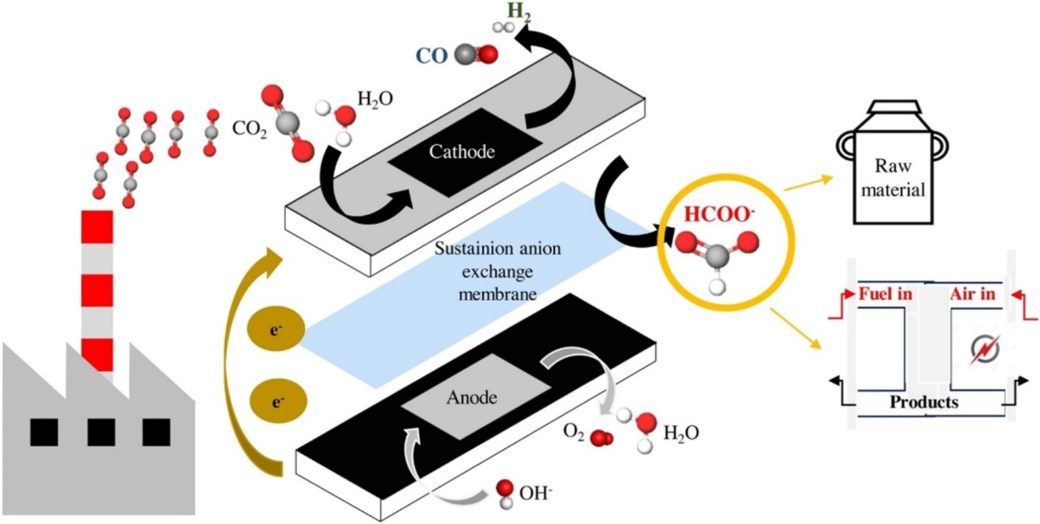
The electrochemical conversion of CO2 to formic acid or formate has attracted great interests recently. There is a large number of studies published in this field. However, most of the studies operated in a discontinuous mode in different electrochemical reactor configurations which is not feasible for industrial applications. Further, many studies were conducted with a current density lower than 100 … Read More
Hydrogen Production: Photocatalytic Water Splitting or Solar-Electrolysis?
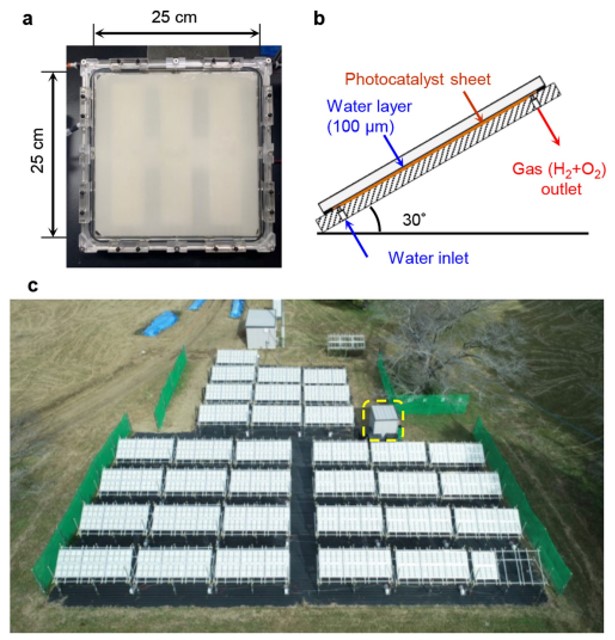
Recently, a paper was published in Nature (doi.org/10.1038/s41586-021-03907-3), demonstrating a 100 m2 array of panel reactors to produce hydrogen from water under the sun. Hydrogen is an attractive and versatile energy carrier, which can be produced from water through photocatalysis using sunlight, and through electrolysis driven by solar or wind energy. Photocatalytic water splitting reaches notably lower conversion efficiencies of … Read More
Electroosmotic flow steers neutral products and enables concentrated ethanol electroproduction from CO2
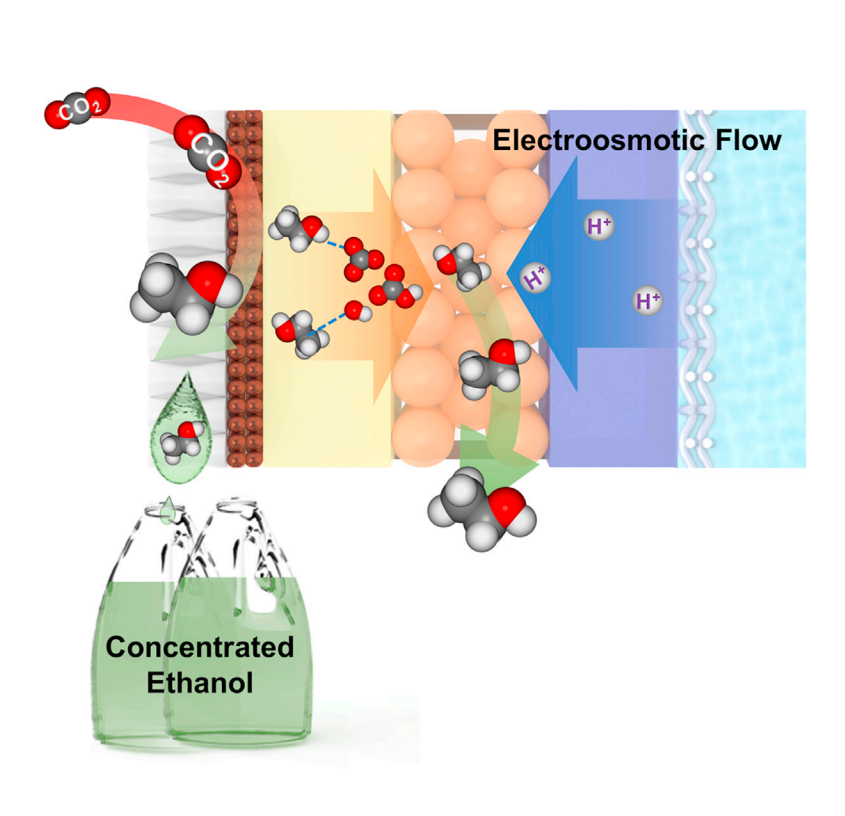
Electrochemical CO2 reduction reaction (CO2RR) provides a promising route to convert renewable electricity into valuable and storable multi-carbon products such as ethanol. With recent advances in CO2RR catalysts, the electroproduction of ethanol approaches industrially relevant production rates and selectivities. Membrane electrode assembly (MEA) electrolyzers are reaction platforms that, when equipped with highly active and selective catalysts, enable CO2-to-ethanol conversion at … Read More